

All Articles
A lab created a drug-matching platform that uses artificial intelligence (AI) to help researchers, clinicians and, most importantly, patients find additional uses for drugs that have already gone through clinical trials and received approval from the FDA. Read More ›
Patients diagnosed with high-risk multiple myeloma persistently exhibit markedly inferior survival rates compared with patients without high-risk disease, despite the advancements in novel therapeutic agents available today. Read More ›
The intravenous administration of the anti-CD38 antibody isatuximab, in conjunction with pomalidomide and dexamethasone, has received approval for the treatment of patients with relapsed or refractory multiple myeloma (RRMM), as established by the findings of the ICARIA-MM study (NCT02990338) and presented at the International Myeloma Society 21st Annual Meeting & Exposition. Read More ›
Bortezomib in combination with lenalidomide and dexamethasone (VRd) represents a standard initial treatment option for both transplant-eligible and -ineligible patients with multiple myeloma, according to study findings that were presented at the 21st International Myeloma Society Annual Meeting. Read More ›
In patients with newly diagnosed multiple myeloma (NDMM), the use of anti-CD38 monoclonal antibodies (mAbs) enhances the effectiveness of standard treatment protocols, according to a study presented at the 66thAmerican Society of Hematology Annual Meeting & Exposition in San Diego, CA. Read More ›
Patient experience has become a cornerstone of medical office operations. It significantly influences patient outcomes, satisfaction, and overall well-being. If you are interested in a deeper dive into this topic, find more information for a comprehensive 3-hour webinar on Tuesday, March 11 from 11 a.m. – 2 p.m. CST . Read More ›
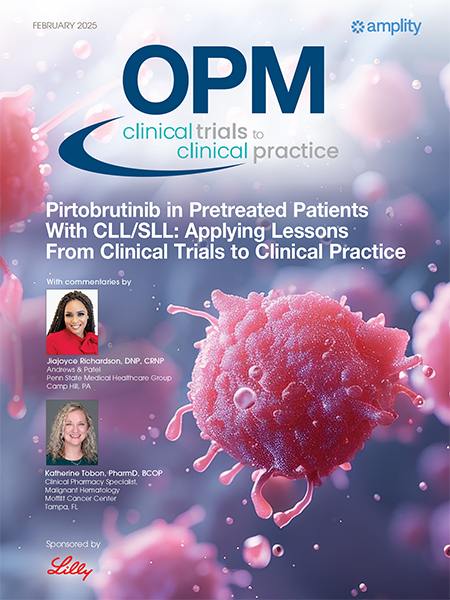
In their expert commentaries, Katherine Tobon, PharmD, BCOP, and Jiajoyce Richardson, DNP, CRNP, examine the role of Bruton tyrosine kinase (BTK) inhibitors, with a particular emphasis on pirtobrutinib, in treating chronic lymphocytic leukemia (CLL) and small lymphocytic lymphoma (SLL). They provide a thorough review of the BRUIN study, concentrating on the safety profile and therapeutic efficacy of pirtobrutinib in patients with CLL or SLL who have previously received at least 1 BTK inhibitor. Read More ›
The Calendar Year 2025 Medicare Physician Fee Schedule Final Rule was published on November 1, 2024. Providers should understand the new regulations and guidelines to stay compliant with billing and coding practices. Read More ›
Billing for navigation services was a central topic at the recently held Academy of Oncology Nurse and Patient Navigators meeting, with one speaker discussing the vital importance of invoicing for these services in light of recent reimbursement obstacles. Read More ›
Adding tafasitamab (Monjuvi; Incyte) to lenalidomide (Revlimid) and rituximab (Rituxan) resulted in a 57% reduction in investigator-assessed risk of progression, relapse, or mortality in patients with relapsed or refractory follicular lymphoma, according to results from the inMIND trial, which were presented at the 66th ASH Annual Meeting and Exposition held in San Diego, CA. Read More ›