
Editor's Note: In a series of interviews conducted at ASCO 2025, our Kristin Siyahian, VP, Branded Channels, spoke with some key leaders in oncology and heard their thoughts on what trends and therapies will be shaping future oncology care. We present a summary of a few interviews in that series, and we encourage you to listen to the full podcast interviews at www.oncpracticemanagement.com/voices-from-asco-2025.
Artificial Intelligence Assistant Unlocks Cancer Clues
Most researchers know that analyzing biomedical data often requires highly trained data researchers several weeks, or even months, of work. A new artificial intelligence (AI) tool is helping researchers uncover connections between genes and disease, according to Enrique Velazquez-Villarreal, MD, PhD, MPH, Assistant Professor in the Department of Integrative Translational Sciences at City of Hope.1
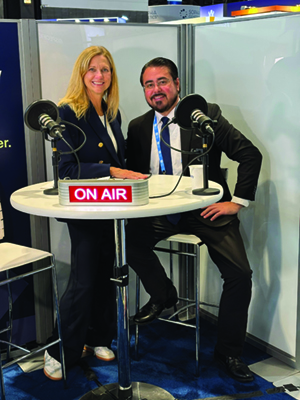
Dr Velazquez-Villarreal is enthusiastic about the use of AI in the fight against cancer.
Now, researchers can simply ask a question, and an AI program can interpret the query, search the data, and deliver results. Dr Velazquez-Villarreal noted in an interview at ASCO 2025 that this program, AI-HOPE, removes technical barriers, empowering any trained medical researcher to explore complex questions through intuitive language-based interaction.
The researchers recently tested AI-HOPE using data from The Cancer Genome Atlas. AI-HOPE correctly identified that TP53 gene mutations are more common in patients with late-stage colorectal cancer than in those with early-stage disease and that KRAS mutations are associated with poorer outcomes when patients are treated with the chemotherapy drug combination FOLFOX.
These findings are consistent with years of prior research—validating AI-HOPE’s ability to independently generate accurate evidence-based insights, he said. Unlike many cloud-based tools, AI-HOPE runs entirely on secure, local systems, ensuring that sensitive patient information remains protected. The system is adaptable and scalable, making it suitable for studying other diseases, treatments, and medical conditions. As such, AI-HOPE, and tools like it, represents a powerful tool for advancing precision medicine, where therapies are customized to each patient’s unique genetic profile, according to Dr Velazquez-Villarreal.
References
- Yang EW, Velazquez-Villarrreal E. AI-HOPE: an AI-driven conversational agent for enhanced clinical and genomic data integration in precision medicine research. Bioinformatics. 2025;41:btaf359.
Melanoma Insights From IGNYTE
As one of the most commonly diagnosed forms of cancer, interventions to treat cutaneous melanoma are highly sought after.
Omid Hamid, MD, Chief of Research and Immuno-Oncology at The Angeles Clinic and Research Institute, told Oncology Practice Management that clinical trials are shedding light on therapies that are proving effective in destroying tumor cells.
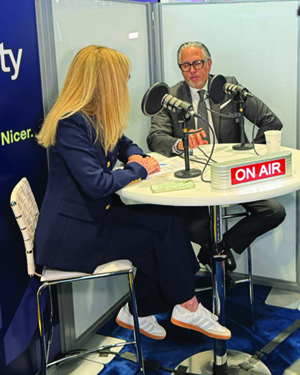
Dr Hamid discusses compelling research in the treatment of melanoma.
Specifically, Dr Hamid discussed the IGNYTE-3 (NCT06264180) clinical trial, which is a phase 3 study that is looking at patients aged >12 years with advanced cutaneous melanoma who have progressed on anti–programmed cell death protein 1 (PD-1) or anti–CTLA-4 therapy. The trial explores the efficacy of RP1 (vusolimogene oderparepvec [VO]), combined with nivolumab and compared that with physician’s choice.1 RP1 is a herpetic oncolytic virus that selectively replicates in and destroys tumor cells while sparing normal tissue.
One of the differentiators of RP1 is its ability to induce both local and distant tumor responses, addressing limitations seen in earlier generations of these viruses, he said. The trial is looking at RP1’s capacity to provoke durable responses in patients who have already progressed after prior therapies, such as BRAF inhibitors, and anti–CTLA-4 and anti–PD-1 agents.
According to the study abstract, “data from a registration-intended cohort of the IGNYTE study (NCT03767348) showed that intratumoral VO + intravenous nivolumab was well tolerated and demonstrated durable, clinically meaningful antitumor activity (ORR, 32.9% per independent central review using RECIST V1.1) in patients with advanced melanoma and confirmed progression on prior anti–PD-1 therapy.”
The IGNYTE-3 trial also highlights the potential uses for RP2 and RP3, which build on RP1 by incorporating additional immunotherapeutic payloads, including checkpoint inhibitors, he said. This allows for the delivery of combination therapies without the toxicity typically associated with systemic administration. Importantly, the viral vector nature of these therapies provides a safety mechanism; if adverse effects arise, antiviral agents can halt viral replication.
The unique mechanism of action positions RP1, RP2, and RP3 as approaches that address unmet needs—approximately 60% of patients do not achieve durable responses with checkpoint inhibitors alone. RP1’s ability to induce durable responses in post-checkpoint failure patients underscores its potential as a vital addition to the oncologist’s toolkit, Dr Hamid noted.
Moreover, RP1’s application spans multiple stages of a patient’s treatment journey, offering opportunities to integrate it into combination regimens or as a standalone therapy in refractory cases.
Although there are opportunities with RP1, its commercialization faces unique challenges. Unlike traditional oncology therapeutics, which are primarily oral or infusional, RP1 requires direct injection into tumors. This necessitates a shift in clinical practice, particularly for interventional radiologists and radiation oncologists, who must adopt a more active role in administering the therapy.
Educating practitioners on RP1’s benefits and administration protocols will be crucial for widespread adoption. At institutions like The Angeles Clinic, radiologists are viewed as integral members of the multidisciplinary oncology team, actively contributing to patient outcomes. This model may serve as a blueprint for incorporating RP1 into routine care.
References
- Luke JL, Davarifar A, Najjar YG, et al. A randomized, controlled, multicenter, phase 3 study of vusolimogene oderparepvec combined with nivolumab vs treatment of physician’s choice in patients with advanced melanoma that has progressed on anti–PD-1 and anti–CTLA-4 therapy (IGNYTE-3). J Clin Oncol. 2025; doi:10.1200/JCO.2025.43.16_suppl.8047
Emerging Immunotherapies for Small Cell Lung Cancer: Expanding the Horizon
Small cell lung cancer (SCLC) remains one of the most challenging malignancies in oncology, characterized by rapid progression, high recurrence rates, and limited therapeutic options, according to Greg Kalemkerian, MD, a leading medical oncologist and professor at the University of Michigan.
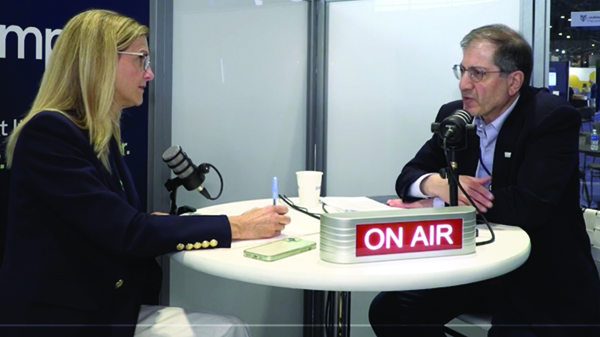
Dr Kalemkerian provides perspective on current strategies to treat lung cancer.
Checkpoint inhibitors, particularly anti–programmed death-ligand 1 (PD-L1) agents, combined with chemotherapy, have become a standard of care for extensive-stage SCLC. However, many patients with SCLC do not derive lasting benefit from PD-L1 inhibitors, and the durability of responses is inconsistent. These inconsistencies highlight the need for strategies beyond programmed cell death protein 1 (PD-1)/PD-L1 targeting.
To address the limitations of current therapies, researchers are investigating alternative immunotherapy targets, according to Dr Kalemkerian. One promising avenue lies in targeting B7-H3, a member of the B7 family of immune checkpoint molecules. Unlike PD-L1, B7-H3 appears to play a more significant role in the immune evasion mechanisms of SCLC. Early clinical data suggest that therapies targeting B7-H3 may offer higher response rates compared with PD-L1 inhibitors, although not all patients benefit. These findings underscore the complexity of SCLC’s immune microenvironment and the need for personalized approaches to therapy.
Another exciting development is the emergence of DLL3 (delta-like ligand 3) as a therapeutic target. DLL3 is a protein expressed on the surface of SCLC tumor cells but not on healthy tissues, making it an attractive candidate for selective targeting. Therapies directed at DLL3 represent the first true “targeted therapy” for SCLC, he said, distinguishing it where such approaches have historically been lacking. DLL3-targeted agents, such as tarlatamab (also referred to as T-LAAB), are showing promise in clinical trials. Although not a panacea, these therapies may represent an important “brick in the wall” of SCLC treatment, contributing to incremental improvements in patient outcomes.
The limited efficacy of PD-L1 inhibitors in SCLC raises critical questions about the mechanisms of immune resistance in this disease. Unlike non–small cell lung cancer (NSCLC), where PD-1/PD-L1 expression plays a central role in immune evasion, SCLC appears to rely on alternative pathways. Identifying these mechanisms is a key focus of ongoing research.
The ultimate goal of these efforts is to “raise the bar” for SCLC patients by increasing response rates and extending survival across a broader range of individuals, according to Dr Kalemkerian. Although PD-L1 inhibitors have provided a valuable proof of concept, the next generation of immunotherapies seeks to build on this foundation by addressing the unique biology of SCLC. The path forward will likely involve combination approaches that integrate multiple immunotherapy targets, as well as chemotherapy, radiation, and other modalities.
For example, ongoing trials are exploring how therapies targeting B7-H3 and DLL3 can be combined with existing checkpoint inhibitors or other agents.
One study that was presented at ASCO 2025 by Kalemkerian and colleagues looked at top-line efficacy and safety in 281 patients with RET fusion–positive NSCLC who received pralsetinib 400 mg once daily, with a median duration of treatment of 14.95 months.1 In that study, pralsetinib use in patients with advanced RET fusion–positive NSCLC produced clinically meaningful and durable responses regardless of prior therapies, with a manageable safety profile. Overall response rate was 70.3% and median duration of response was 19.1 months in the measurable disease population. In the efficacy population, median overall survival was 44.3 months with median follow-up of 47.6 months. Median progression-free survival was 13.1 months overall but was longer in the United States compared with Asia or Europe.
References
- Lopes G, Gainor JF, Subbiah V, et al. Efficacy and safety of pralsetinib in patients with advanced RET-fusion-positive NSCLC: final data from the phase 1/2 ARROW study. J Clin Oncol. 2025; doi:10.1200/JCO.2025.43.16_suppl.8047