


BOSTON—Imagine a circle, with healthcare providers, researchers, and community partners such as churches making up the outer ring. In the center, picture a patient with cancer. All of those groups working together is the key to boosting clinical trial engagement, particularly in underrepresented populations.
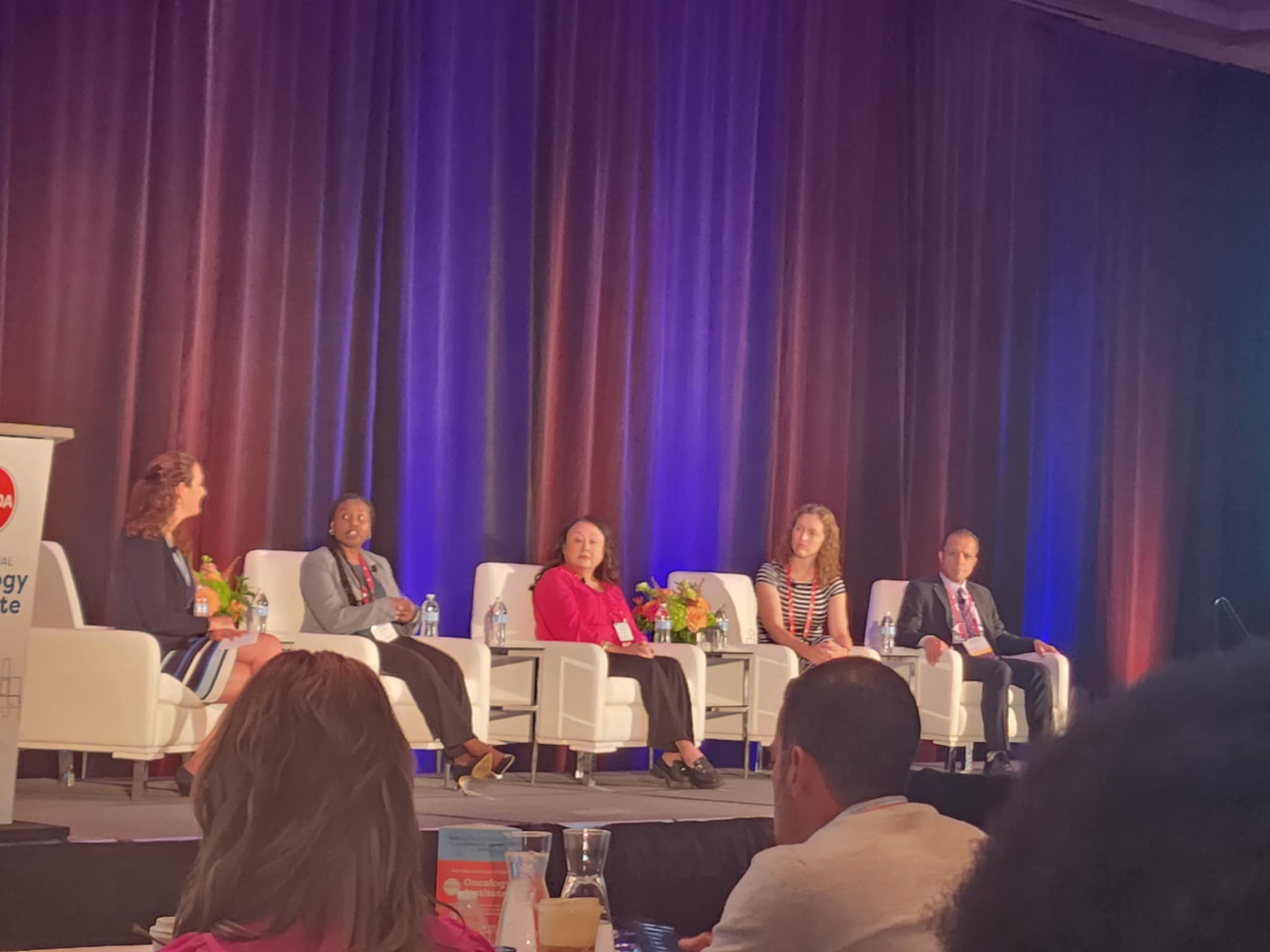
During a recent panel discussion at NCODA's 6th Annual Oncology Institute, Sam Abdelghany, PharmD, MMHA, BCOP, who is executive director of oncology pharmacy at Smilow Cancer Hospital at Yale New Haven Health; Emily Kinsey, MD, who is an oncologist at VCU Massey Cancer Center; Camille Pope, PharmD, who is chief medical lead at Acclinate; Katie Brown, who is principal consultant with patient advocacy at YOON Healthcare Centers; and Sharon Karlsberg, MBA, who is principal with ZS, acknowledged the challenges involved in recruiting patients for trials, and shared some important pearls to help address those challenges.
The discussion was particularly timely, given the FDA’s update to draft guidance in June 2024, which centers on Diversity Action Plans. The guidance asks sponsors of clinical studies to submit Diversity Action Plans as part of new provisions of the Federal Food, Drug and Cosmetic Act added by the Food and Drug Omnibus Reform Act (FDORA). These plans apply to phase 3 clinical studies or other pivotal clinical studies of a drug or biological product, as well as certain devices. The requirement to submit a Diversity Action Plan applies to clinical studies for which enrollment begins 180 days after publication of the final guidance.1
To level set, the panel discussed a study that was presented in June at ASCO's Annual Meeting, which noted that of some 2,660,566 patients with cancer, only 36,456, or 1.4%, were actually enrolled in a clinical trial. While the types of cancer that had trial participants was diverse, with 28.6% reporting breast cancer, 26.3% prostate cancer, 22.8% lung cancer, 12.8% colorectal cancer, and 9.5% pancreas cancer, “trial participants were more likely to be young, White, privately insured, have metastatic disease, and live in a less vulnerable census tract.”2
While the panel agreed there are likely many contributors to explain why there are so few clinical trial participants, the key to addressing the issue comes down, in Abdelghany’s opinion, to 3 main areas: “why should I participate in this trial,” “can I do it,” and “who is asking me to join this trial?”
He said that addressing these questions early on, even introducing the topic of clinical trial participation at the initial diagnosis discussion, can and will likely go a long way to encourage participation, adding that the “who is asking” is a key part of the equation.
“Is the person asking a physician I can trust, is it someone who is looking out for my best interest, is the information translated it to me in a language I understand…these are all areas that need some work,” he said.
While the panel acknowledged there is a long way to go in terms of encouraging diverse patient populations to participate in clinical trials, several speakers noted that there is reason for hope. Before the draft guidance was even issued by the FDA in June, several industry sponsors had already partnered with healthcare professionals to encourage participation.
The panel pointed to Genentech, Lilly, GSK, Bristol Myers Squibb, and Pfizer as all being on the cutting edge of diversifying clinical trial participation. They also cited programs like the nonprofit HEAL Collaborative and NCI's Equity and Inclusion Program.
Healthcare systems are also becoming more proactive with enrolling diverse populations into clinical trials, with successful programs run through the University of Chicago, which established 10 community-based clinical and hospital sites in greater Chicago, leading to spikes in enrollment of Black patients.
Abdelghany cited their healthcare system, which partnered with 2 organizations in the Latino and African American communities, leveraging faith-based community groups, along with an aggressive marketing campaign, to get the word out about clinical trial participation. Panelists honed in on the importance of education, and mentioned that while social media can be a great tool to get the word out, not everyone can access social media, so it needs to start with the patient’s medical home.
Brown emphasized the importance of the physician in encouraging participation, even at the moment of diagnosis. Several panelists pointed to the importance of educational programs like the one NCODA was running in partnership with supporters like BeiGene, Aveo Oncology, Gilead and Incyte, as key to getting the word out about clinical trials.
“My provider wasn’t talking about clinical trials, and if I hadn’t been in this, I wouldn’t have known to ask,” Brown said. “Having that conversation, being given materials, that address FAQs, that can start a conversation with the HCP, and helping get them access to a patient navigator…this can all help eliminate distrust and encourage participation.”
References
- FDA. FDA Guidance Provides New Details on Diversity Action Plans Required for Certain Clinical Studies. June 26, 2024. Accessed August 21, 2024. https://www.prnewswire.com/news-releases/fda-guidance-provides-new-details-on-diversity-action-plans-required-for-certain-clinical-studies-302183322.html
- Perati SR, Mohayya SM, Shippey E, et al. Social vulnerability and clinical trial enrollment: the next frontier of health equity. J Clin Oncol. Vol. 42, No 16 Supplement
Connect with us on Linkedin!
We offer insightful solutions that help cancer care teams, including doctors and staff, adapt to the changing world of oncology.
Don't just take our word for it, NCODA agrees!