

All Articles
By Corbin Davis
Recent advances in the treatment of patients with multiple myeloma have dramatically altered the trajectory of the disease, as providers now have several efficacious agents in various drug classes at their disposal. At the 2017 NCCN Hematologic Malignancies Congress, Shaji K. Kumar, MD, Division of Hematology, Mayo Clinic, Rochester, MN, provided management strategies for newly diagnosed multiple myeloma, including the role of autologous stem-cell transplant (ASCT) and posttransplant maintenance therapy. Read More ›
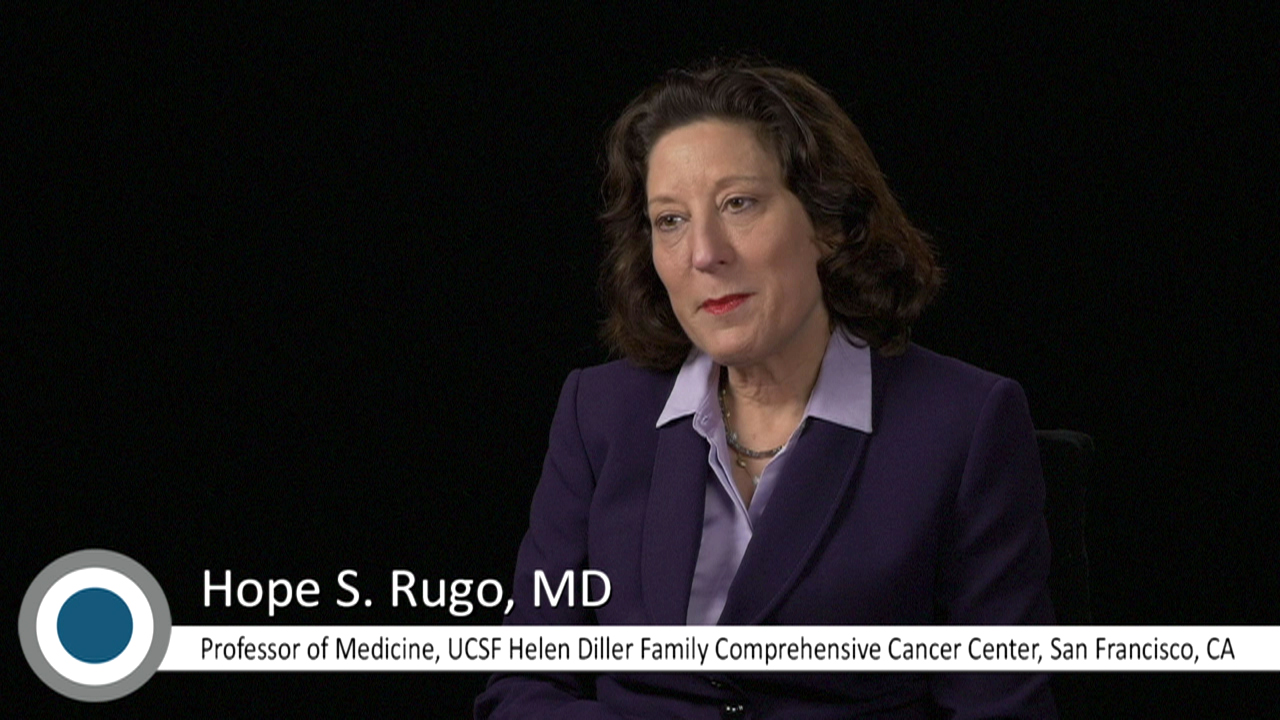
Dr Hope Rugo cites that CDK4/6 inhibitors play a critical role in estrogen signaling and can be very effective in treating metastatic breast cancer when used in combination with hormone therapy.
Read More ›
Dr. Hope Rugo attempts to dispel this misconception, citing that endocrine therapy and CDK4/6 inhibitors are well tolerated and don’t have the intensive side effects associated with chemotherapy. Read More ›
Dr Hope Rugo addresses some of the main differences between the 3 CDK4/6 inhibitors that are FDA-approved in HR-positive metastatic breast cancer.
Read More ›
Hope S. Rugo, MD, describes how she would treat a patient with HER-positive metastatic breast cancer that has progressed with a CDK4/CDK6 inhibitor plus an aromatase inhibitor. Read More ›
The number of cancer survivors is increasing. To keep up with this trend, survivorship care must evolve and become more efficient, insists Jennifer R. Klemp, PhD, MPH, MA, Director, Cancer Survivorship, University of Kansas Cancer Center, Westwood. Read More ›